
Running Boards vs Step Bars: The Right Choice for Your Truck
You’re looking at your truck or SUV right now and thinking about the same question most owners ask after the first few awkward climb-ins. Do you want the wide, full-length step of a running board, or the tighter, more rugged look of a step bar?
In Fort Myers, that choice isn’t only about style. Salt in the air, summer rain, wet parking lots, sandy job sites, and daily use by kids, older passengers, or work crews all change what “best” means. A part that looks good on day one can turn into a maintenance headache if it traps grime, rusts early, or never fits how you use the vehicle.
I’ve seen plenty of owners focus on the purchase price and miss the bigger cost. The better question is simple: which option gives you the best access, protection, and durability for the way you drive in Florida?
Running Boards Explained The Full-Length Platform for Maximum Access
A parent with a toddler on one hip, a backpack in the other hand, and wet flip-flops in a Fort Myers parking lot does not need a tiny step target. A full-length running board gives that passenger room to plant a foot and get in safely. This wide access is a primary benefit.
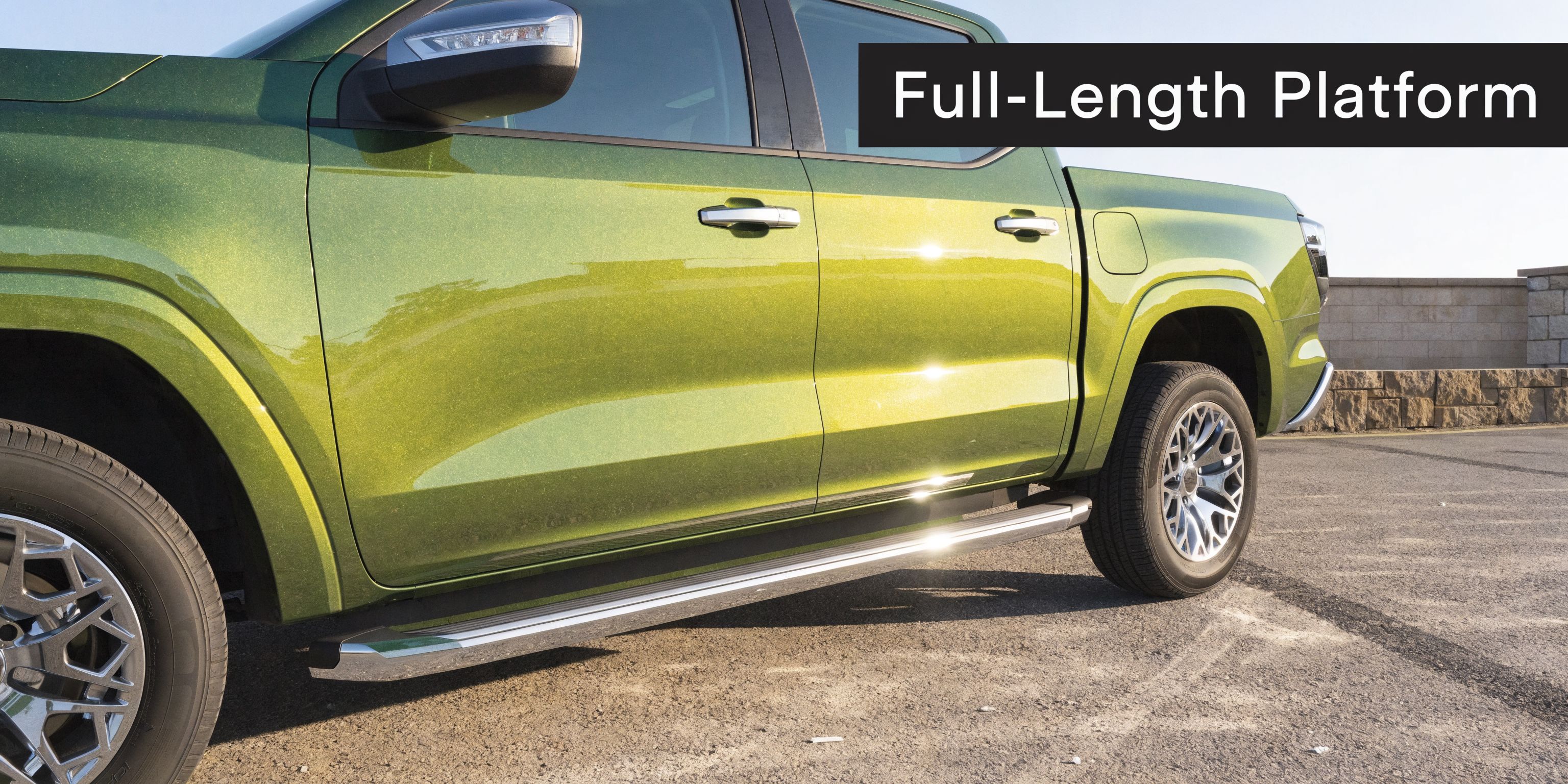
If you want to compare layouts, finishes, and vehicle-specific fitments, browse these full-length running boards for trucks and SUVs.
Running boards run along most or all of the cab, so the step is there whether you are getting in from the front door, the rear door, or shifting your footing while loading kids, tools, or groceries. On a daily driver, that wider platform is easier to use than a small pad under each door.
Who usually gets the most value from them
Running boards make the most sense for vehicles that carry people often.
- Families with kids: Children rarely hit the same spot every time. A longer platform gives them more margin for error.
- Older passengers: A broad, flat step feels steadier and easier to trust.
- Contractors and service techs: Work boots, tool bags, and wet soles are easier to manage on a wider surface.
- SUV owners: Rear passengers use the step all day, not just the driver.
That usage pattern matches what the market looks like. Analysts at Grand View Research describe strong demand for side steps and running boards in pickups, SUVs, and commercial vehicles, driven by access, utility, and appearance in the aftermarket, according to their automotive accessories market overview.
How running boards are built
Most running boards are made from aluminum or steel with a textured stepping surface, molded tread, or rubberized grip strips. The board sits flatter and wider than a tubular bar, and it usually follows the length of the cab.
That design changes how the part works every day.
A driver can set down a full foot instead of searching for a smaller step pad. A passenger can climb in from an awkward angle without losing footing. If you reach into the cab with both hands full, the extra surface helps.
I tell customers the same thing in the shop. If the vehicle is used for school runs, jobsite stops, grocery trips, and family hauling, full-length access usually gets used more than they expect.
Where they shine in Florida
Running boards fit Florida life well because they help in the situations owners deal with every week. Wet pavement after summer rain. Sand stuck to shoes at the beach. Muddy boots after a jobsite stop. All of that makes a larger stepping surface easier to live with.
They also add some shielding along the rocker area. That matters on coastal roads where sand, grit, and road spray keep hitting the lower body.
The trade-off shows up later. Running boards cover more area, so they can also trap more sand, salt residue, and grime underneath if nobody rinses them out. Along the Gulf Coast, that buildup affects long-term ownership cost. Cheap steel boards with thin coatings start showing rust at brackets and seams faster than many buyers expect. Plastic trim can also fade or chalk in heavy UV exposure.
That is why material choice matters more here than the sticker price. Powder-coated aluminum usually holds up better in Fort Myers humidity than bargain steel. Stainless can wear well too, but only if the hardware and mounting points are protected from corrosion. A low-price board that needs replacement in a few seasons is not the cheaper option.
What buyers often miss
A lot of owners shop running boards by looks first. The better way is to ask three questions.
How often will people use them? How easy are they to clean underneath? What is the finish going to look like after a few years of sun, salt air, and wash cycles?
Those answers separate a good purchase from one that becomes a maintenance problem.
Running boards also give the vehicle a cleaner, more integrated look than exposed tubes. That matters on newer SUVs and late-model trucks where owners want the step to follow the body line instead of standing out as a separate accessory.
Best use cases for running boards
| Vehicle use | Why running boards fit |
|---|---|
| Family SUV | Easier, more forgiving step for kids and older passengers |
| Daily-driven pickup | Full-length access under both doors |
| Work truck | Better footing with boots and gear |
| Fleet vehicle | Practical access and cleaner integrated appearance |
Running boards are built for convenience, but in Florida they are also a durability decision. Choose the right material, keep the underside clean, and they usually return better value over time than the cheapest option on the shelf.
Step Bars Unpacked A Rugged and Minimalist Alternative
Step bars are the leaner option. Instead of a full platform, you get a tubular bar with step pads placed where people typically climb in.
That sounds simpler, and it is. It also changes how the truck looks and how the step behaves in mud, sand, and tighter off-road use.
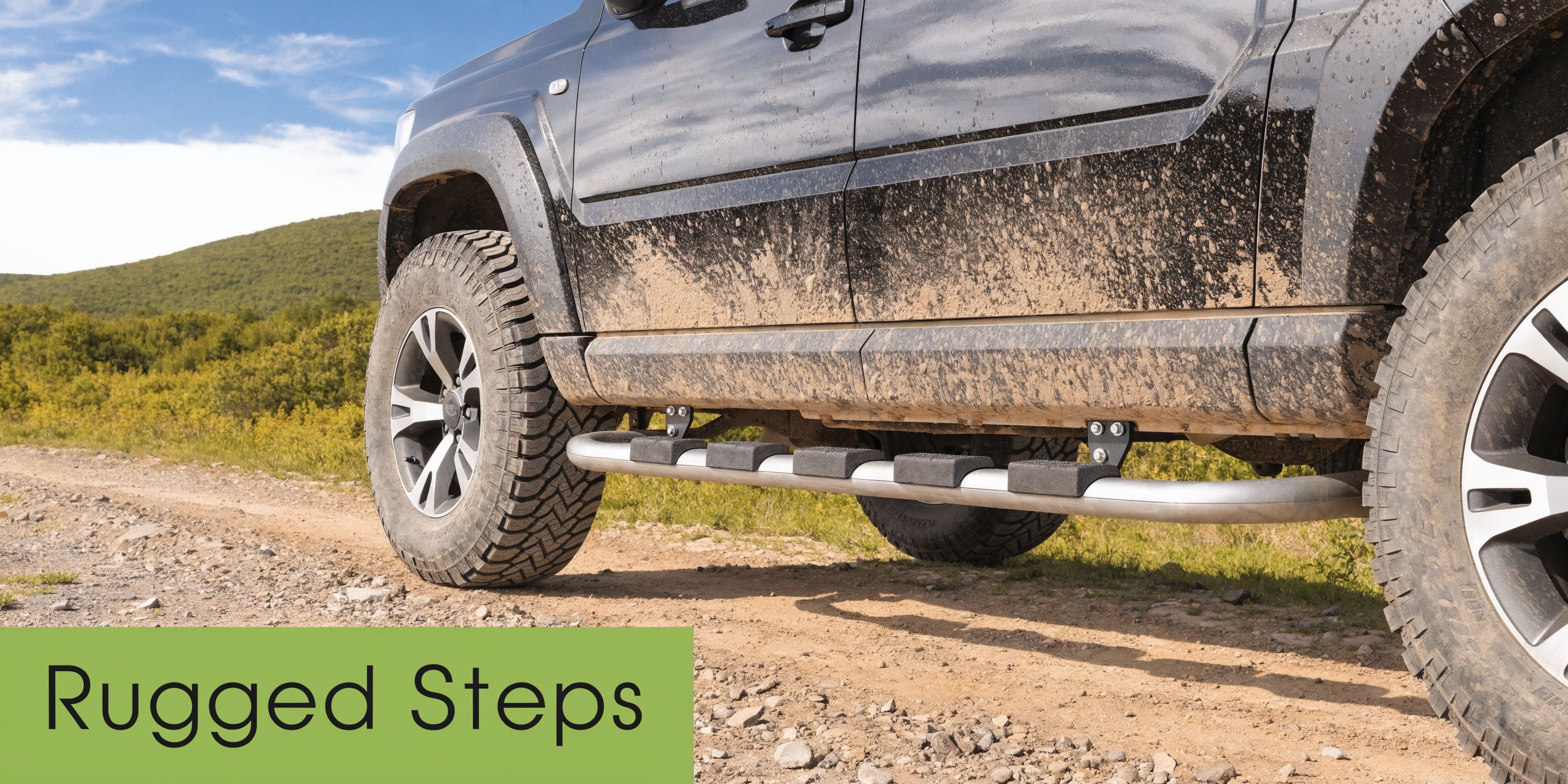
If you want to compare styles like round, oval, and hoop configurations, these step bars show the common layouts.
Why some truck owners prefer them
Step bars appeal to a different kind of buyer. They don’t try to look built into the rocker line. They look like an accessory, and for a lot of truck owners, that’s exactly the point.
The style is more exposed, more mechanical, and more off-road oriented. On the right build, especially with aggressive tires, black wheels, and a leveled stance, step bars look right where running boards can feel too polished.
They also leave more open space around the rocker area. That can be useful if your truck sees mud, sand, or jobsite grime that you’d rather not trap against the body.
Typical step bar designs
Not all step bars feel the same.
- Round bars: Clean, classic, and usually the simplest visual option.
- Oval bars: A little more step area without moving all the way to a running board.
- Hoop steps: More targeted entry point, often chosen for lifted trucks.
- Cab-length bars: Better for front and rear passenger access.
- Wheel-to-wheel styles: Helpful on trucks where bed access matters.
That variety is why step bars work for owners who want a functional step without adding a lot of bulk.
Where step bars shine
Step bars make the most sense when you value a narrower profile and a tougher look. They also work well for truck owners who don’t need every inch under the doors covered.
A muddy fishing trip, a sandy trail entrance, or a truck that gets rinsed fast but not detailed often can all favor the more open design. Debris has fewer places to sit compared with a broad board tucked tight to the body.
A step bar is usually the better answer when you want access help, but you don’t want the side of the truck to feel visually heavy.
Materials and finishes matter here
Step bars are often sold in powder-coated steel, polished stainless steel, and aluminum. The visual difference is obvious, but the bigger issue in Florida is how each finish lives over time.
Powder coat can look sharp and rugged. It also needs to stay intact. Once the finish gets chipped, moisture has a way in. Polished stainless tends to be easier to keep presentable. Aluminum keeps weight down and resists corrosion well, though the visual style is different from a classic steel tube.
Buyers can make a mistake here. They choose based on shape alone and ignore what the truck sees every week. Coastal humidity and repeated wet-dry cycles punish cheap finishes.
The right owner for step bars
A few profiles come up again and again:
- The weekend trail driver: Wants a step, but not one that visually hangs low and wide.
- The style-focused pickup owner: Likes a tubular, rugged look more than an integrated board.
- The driver who values simplicity: Prefers a smaller accessory with fewer visual lines.
- The owner with a lifted truck: Often wants a more targeted step point rather than a full-length platform.
Step bars aren’t the “budget version” of running boards. That’s too simplistic. They’re a different answer to a different need.
If your truck is part daily driver and part weekend toy, or if you want easier entry without changing the truck’s personality too much, step bars often hit the sweet spot.
Head-to-Head Comparison Function, Protection, and Performance
A Fort Myers truck sees the difference fast. One owner uses the vehicle for school drop-off, grocery runs, and weekend beach trips. Another backs down boat ramps, hits muddy jobsites, and parks outside in salt air year-round. Both need a step, but they do not need the same kind of step.
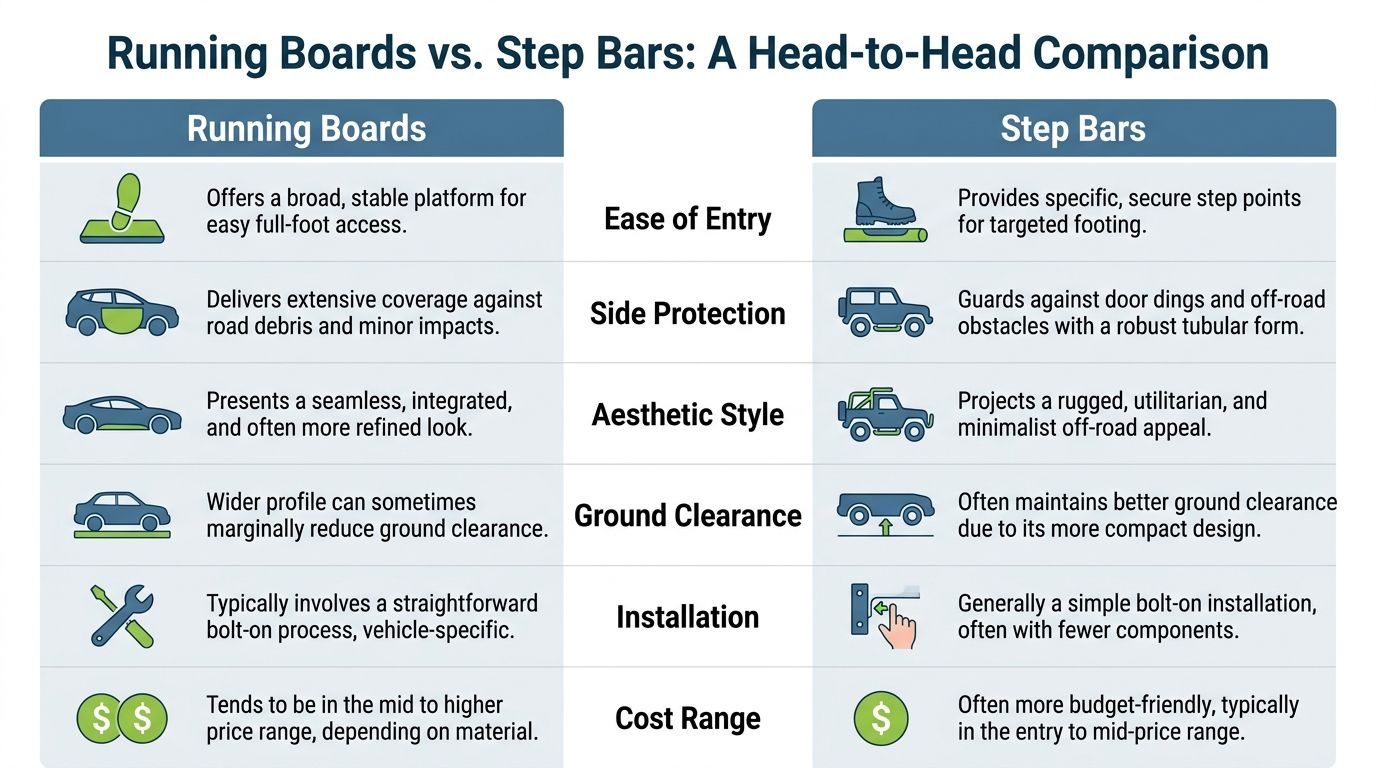
The quick side-by-side
| Category | Running boards | Step bars |
|---|---|---|
| Entry feel | Broad platform, easier full-foot placement | Smaller step points, more targeted footing |
| Side coverage | More rocker protection | Less body coverage |
| Off-road profile | Better integrated look, but still broader | Narrower, more trail-oriented appearance |
| Surface area | More usable standing room | Focused step pad area |
| Best fit | Families, fleets, daily drivers | Off-road builds, minimalist setups |
Ease of entry
Running boards make daily use easier for more people. The full-length platform gives kids, older passengers, and anyone carrying gear more room to plant a foot without hunting for a small pad. That matters on wet mornings, in work boots, and in parking lots where people are climbing in at an angle.
Step bars still do the job. They just ask for more precise foot placement, especially on lifted trucks and SUVs. For a solo driver who gets in the same way every day, that trade-off may be fine. For a family vehicle, it usually gets old.
I see this at the shop all the time. Buyers focus on looks at first, then come back to how the step works in real life after a few weeks of use.
If passengers are getting in with backpacks, tool bags, coolers, or a child on one hip, the wider step usually earns its keep.
Later in this section, the video below gives a useful visual look at the general differences in form and use.
Protection along the lower body
Running boards cover more of the rocker area, so they do a better job intercepting road spray, sand, and debris before it reaches the paint. On a Florida vehicle, that is more than a cosmetic point. Preserving the lower body helps control long-term repair costs, especially for trucks and SUVs that spend time near the coast.
Step bars leave more of that area exposed. The upside is clearance. The downside is less shielding from the mess that gets kicked up off wet roads, shell lots, and jobsite entrances.
The long-term cost angle gets missed here. A less expensive step bar can still be the better value if the vehicle needs the extra clearance and the owner stays on top of washing and Florida rust-proofing for coastal trucks and SUVs. A running board can also save money over time if it keeps paint and rocker panels in better shape on a daily driver that sees constant passenger use.
Ground clearance and off-road use
Step bars usually fit the off-road conversation better because they stay tighter and visually lighter. That matters on lifted trucks, trail builds, and work rigs that see uneven ground, ruts, or construction entrances.
Running boards can still work on a truck that handles boat ramps, grass lots, and light dirt roads. But a wide board adds more surface area along the side, and that can become a nuisance if the truck is regularly pushed into rougher conditions.
This choice comes down to where the vehicle really goes. A truck that spends 95 percent of its life on pavement should be judged by everyday convenience. A truck that regularly leaves pavement should be judged by clearance, exposure, and how much hardware is hanging below the body.
Weight capacity and confidence under load
A running board often feels more secure because the stepping surface is wider and the mounting layout spreads the load across more of the length. That gives passengers better balance, especially when they step slowly or put full weight on one foot before climbing.
Step bars are strong enough for normal use, but they feel different. The contact point is smaller. The step is more concentrated. On a work truck, that can be completely acceptable. On a family SUV or crew cab that sees all ages getting in and out, the broader platform usually feels safer and easier.
What works best by use case
Family and everyday driving
Running boards usually make more sense. They are easier to use in rain, easier for shorter passengers, and more forgiving when people are distracted or carrying something.
Off-road and lifted trucks
Step bars usually fit better. They keep the side profile cleaner and tend to stay out of the way more effectively.
Work trucks and commercial use
The right answer depends on the crew and the site. Frequent entry and exit favors a running board. Rough access roads, uneven terrain, and a need for tighter side clearance often favor a step bar.
Appearance
Appearance still matters, but it should be ranked after function. Running boards give a smoother, integrated look. Step bars show more tube and hardware, which suits a tougher, more exposed style.
The practical verdict
Running boards win on access, comfort, and lower-body coverage. Step bars win on simplicity, cleaner clearance, and a more rugged look.
The better buy is the one that holds up to how the vehicle is used for the next five years, not the one that looks best on day one.
Durability in the Florida Climate Materials and Maintenance
Park a truck in Fort Myers for a year, use it near the beach, run it through summer storms, and the actual durability test begins. Day-one appearance matters less than how the boards or bars look after salt air, standing water, and hard sun have had time to work on them.
That is why this choice affects ownership cost as much as appearance. The cheaper option up front can cost more later if the finish fails early, the hardware corrodes, or the step pads dry out and crack.

Moisture retention is the problem to watch
Around Fort Myers, I see fewer outright breakages than finish failures and creeping corrosion. It usually starts where sand, moisture, and road film sit against brackets, welds, or the lower body.
Running boards can hold more grime near the rocker area because they cover more space and sit closer to the body. Step bars usually drain and air out better because the design is more open. That does not automatically make step bars the better product. It means running boards ask for more regular rinsing and closer inspection if the vehicle lives near the coast.
That difference matters over five or six years of ownership.
Material choice changes the long-term bill
Here is the practical breakdown I give customers who plan to keep their vehicle for a while.
Aluminum
Aluminum holds up well in Florida because corrosion is less of a constant fight. That makes it a strong match for running boards, especially on daily drivers, family SUVs, and trucks that spend time near the water.
The downside is purchase price. You usually pay more at the start, but that extra cost can make sense if it helps you avoid finish failure, heavy corrosion cleanup, or early replacement.
Steel
Steel still works, especially for step bars on work trucks and builds where owners want a traditional tubular look. The catch is that steel in coastal Florida lives or dies by its coating, weld quality, and maintenance.
Powder coat looks good on the rack. Once it gets chipped by gravel, tools, boots, or road debris, humidity gets underneath and corrosion starts spreading from a small spot. Polished stainless usually ages better here, especially if it is cleaned often, but it still needs attention around hardware and mounting points.
Composite and mixed-material designs
Composite step pads and mixed-material boards can help with grip and cut down on corrosion-prone exposed surfaces. They are often a smart fit for daily-driven vehicles where appearance matters and owners want less finish upkeep.
The weak point is usually sun exposure, not structure.
UV damage is part of the durability equation
Florida sun is hard on accessories. Black plastic fades. Rubber pads dry out. Textured surfaces can chalk up and lose that fresh, dark finish long before the metal itself wears out.
That cosmetic wear affects resale and satisfaction more than many buyers expect. A low-price set of bars can start looking tired fast, even if it still functions fine. Over time, that turns a bargain purchase into something the owner wants to replace sooner than planned.
Ownership tip: In Fort Myers, finish quality is part of durability. A good tube or board with a weak coating is still a short-life product.
Maintenance is different between running boards and step bars
Running boards usually need more cleaning underneath and along the inner edge near the rocker panels. That is where damp sand, road grime, and washed-off salt tend to collect. On beach vehicles or trucks that sit outside year-round, skipping that rinse cycle shortens the life of both the accessory and the metal around it.
Step bars are easier to inspect at a glance. You can usually spot chips, rust starts, or packed debris faster because there is less surface area hiding it. That lower-maintenance shape is one reason step bars often make sense for owners who know they will not wash the truck as often as they should.
Neither option is maintenance-free.
How to make either one last longer
A few habits make a significant difference in this climate:
- Rinse after salt exposure: Gulf air, beach parking, and storm runoff leave residue behind even when the truck does not look dirty.
- Wash the hidden areas: Clean the underside of the board or bar, not just the top step surface.
- Check brackets and fasteners: Hardware is often the first place corrosion shows up.
- Fix chips early: Small coating damage turns into visible rust much faster in humid coastal air.
- Protect the lower body too: The accessory and the rocker area age together, so both need attention.
If you want added protection where Florida vehicles usually start to show age first, rust proofing for rocker panels and lower body areas is worth considering.
Which one holds up better in Fort Myers
If low maintenance is the priority, step bars usually have the edge because they shed water and debris more easily. If better footing and more side coverage matter more, running boards can still be the right buy, especially in aluminum or a higher-grade mixed-material design.
The smart choice is the one that fits how the vehicle will be used and how it will be cared for. In coastal Florida, total value comes from material, finish, and upkeep over time, not just the number on the invoice the day it gets installed.
Installation Insights DIY Risks vs Professional Guarantees
A lot of owners underestimate installation because most products are sold as bolt-on. Bolt-on doesn’t always mean foolproof.
On paper, the process sounds simple. Lift the vehicle if needed, line up brackets, attach the board or bar, torque the hardware, and test fit under the doors. In practice, small mistakes show up later as vibration, uneven step height, poor door clearance, or accelerated rust around hardware and contact points.
Where DIY installs go wrong
The most common trouble starts with alignment.
A running board needs to sit straight under the cab and stay evenly supported across its mounting points. A step bar needs its pads positioned where entry occurs. If either one sits slightly off, the truck may still look fine parked, but the owner notices movement or awkward footing almost immediately.
The risk isn’t theoretical. Professional installation success rates exceed 95%, while ARIES data cited in the comparison shows misalignment from improper DIY installs causes vibration or mounting failures in 20% to 30% of cases. The same source notes that incorrect torque specs on frame-mount brackets can stress the vehicle’s frame, which is why proper setup matters, according to Pickups Plus Cars’ running boards vs step bars comparison.
The installation details that matter
A solid install usually comes down to a few things:
- Correct bracket placement: Vehicle-specific mounting points matter. Close isn’t good enough.
- Proper torque: Too loose and the step moves. Too tight and you can stress hardware or mounting points.
- Even positioning: The step should sit level and consistent side to side.
- Hardware protection: In Florida, exposed fasteners and brackets need attention if you want them to last.
- Final recheck: Fasteners should be inspected after initial driving.
Why professional work pays for itself
The cost of a bad install usually isn’t the accessory. It’s the time, rework, damaged hardware, stripped bolts, or rust issues that start because corners were cut.
A professional installer also catches fitment issues before they become your problem. Some trucks have factory variations, existing accessories, or underbody details that affect bracket choice and clearance. That’s easier to handle in a shop than in a driveway halfway through the job.
A side step should feel invisible in use. If you notice movement, odd flex, or awkward placement every day, the install wasn’t right.
If you want the job handled correctly from the start, these installation services are the kind of support that keeps the accessory from becoming a repeat project.
Making Your Final Choice A Guide for Fort Myers Drivers
A Fort Myers truck that looks right on day one can become an expensive mistake after a few summers near the coast.
Final choice comes down to how you use the vehicle, who climbs in and out, and how much abuse the step system will take from salt air, rain, sun, and sand. Purchase price matters, but long-term cost matters more. I have seen cheap steel bars look fine at install, then show rust at the brackets and faded pads far sooner than owners expected.
Running boards usually make more sense for family SUVs, daily drivers, and trucks that carry passengers often. The wider stepping area is easier for kids, older adults, and anyone loading up in work shoes or wet sandals. They also give more side coverage, which helps limit some road spray against the rocker area.
Step bars fit owners who want a tighter look and less bulk under the cab. They also work well for trucks that see rougher ground, job sites, or back-road use where a full-length board can take more hits. The trade-off is simple. You get a smaller step and usually less coverage, but a cleaner profile.
For work trucks, the right answer is usually tied to crew habits, not styling. If drivers are getting in and out all day with tools, coolers, or heavy boots, the extra platform on a running board often pays off over time in comfort and easier footing. If ground clearance and simpler cleanup matter more, step bars can be the better fit.
A practical buyer guide
- Family hauler: Running boards usually deliver better daily comfort.
- Weekend truck with a rugged build: Step bars usually match the use and look better.
- Commercial truck: Choose based on entry frequency, boot traction, and ground conditions.
- Appearance-first owner: Match the step style to the rest of the build, integrated or tubular.
Material choice should be part of the final decision too. In coastal Florida, lower-cost finishes can cost more later if corrosion shows up early or the pads break down in UV. Stainless steel, aluminum, and better-coated hardware usually cost more up front, but they often hold their look longer and need less replacement work.
The final takeaway
Choose running boards if easier access, passenger comfort, and more side coverage matter most.
Choose step bars if you want a simpler, more rugged look and a setup that stays out of the way a bit more.
The best option is the one that still works and still looks good after years of Florida sun, humidity, and coastal exposure.
If you want help choosing the right setup for your truck, SUV, or fleet vehicle, talk with the team at Truck Stuff. They can help you compare running boards and step bars based on how you use the vehicle in Fort Myers, then handle fitment and installation so the upgrade looks right and lasts.