
Get Your Hard Folding Tonneau Cover in Fort Myers
Fort Myers truck owners usually make the same discovery the same way. They load up tools, groceries, fishing gear, work bags, or beach stuff, leave the truck parked for a couple of hours, and spend that whole stop thinking about what’s sitting in the bed.
Then the weather turns.
A Southwest Florida downpour can hit fast, and an open bed gives you almost no margin for error. Add a crowded parking lot, an overnight jobsite, or a truck parked in the driveway during storm season, and the problem is not just inconvenience. It is exposure. Water. Theft. Sun. Salt air. Constant wear.
That is where a hard folding tonneau cover earns its place. It is not just a styling accessory, and it is not only for people who baby their trucks. For a lot of owners around Fort Myers, it is the point where the bed starts working like secure, weather-managed cargo space instead of an open tray you hope nothing happens to.
The right cover lets you lock up gear, keep daily cargo out of sight, and still open the bed quickly when you need lumber, coolers, ladders, or bulky supplies. The wrong cover usually shows its weaknesses fast in Florida. Poor seals leak. Cheap finishes fade. Hardware corrodes. A cover that looked fine in the showroom can become a nuisance if it was not chosen with long-term use in mind.
Your Truck Bed Needs More Than a Wish for Security
A new truck owner often starts with the same assumption. “I’ll just be careful about what I leave back there.”
That works until it doesn’t.
Leave a tool bag in the bed during a lunch stop. Toss in a stroller, golf clubs, or a duffel before dinner. Load up hurricane prep supplies because the store finally had what you needed. The truck bed becomes storage whether you planned for it or not. An uncovered bed, or a weak cover, asks you to trust luck.
A hard folding tonneau cover changes that equation. Instead of relying on visibility and good timing, you get rigid panels, locking points, and a setup that gives everyday cargo a real layer of protection. That matters for contractors carrying jobsite gear, but it also matters for families, boat owners, and anyone who uses a pickup like a pickup.
In Fort Myers, security and weather are tied together. A cover that hides cargo but leaks badly is not solving the problem. A cover that keeps water out but can be peeled back too easily is only halfway there. Hard folding models sit in the sweet spot because they balance access, structure, and practical protection better than many other bed cover styles.
There is also the simple reality of routine use. Many truck owners do not want a bulky one-piece lid that limits hauling flexibility. They want to open part of the bed, grab what they need, and close it again without turning the whole process into a chore. That is one reason folding designs remain popular.
If you are still weighing material and design choices, this breakdown of what’s better, a hard or soft tonneau cover helps frame the difference in plain terms.
In Florida, “good enough” cargo protection usually fails in one of two ways. It lets water in, or it lets people in.
How Hard Folding Tonneau Covers Work
Think of a hard folding cover as a reinforced folding lid for the bed. It is rigid like a fixed top, but it opens in sections so you do not give up the bed every time you need to haul something tall.
The basic structure is straightforward. You have several hard panels, hinges between them, side rails, seals around the perimeter, and a latch system that keeps the cover shut. When closed, those parts work together as one surface. When opened, the panels stack toward the cab.
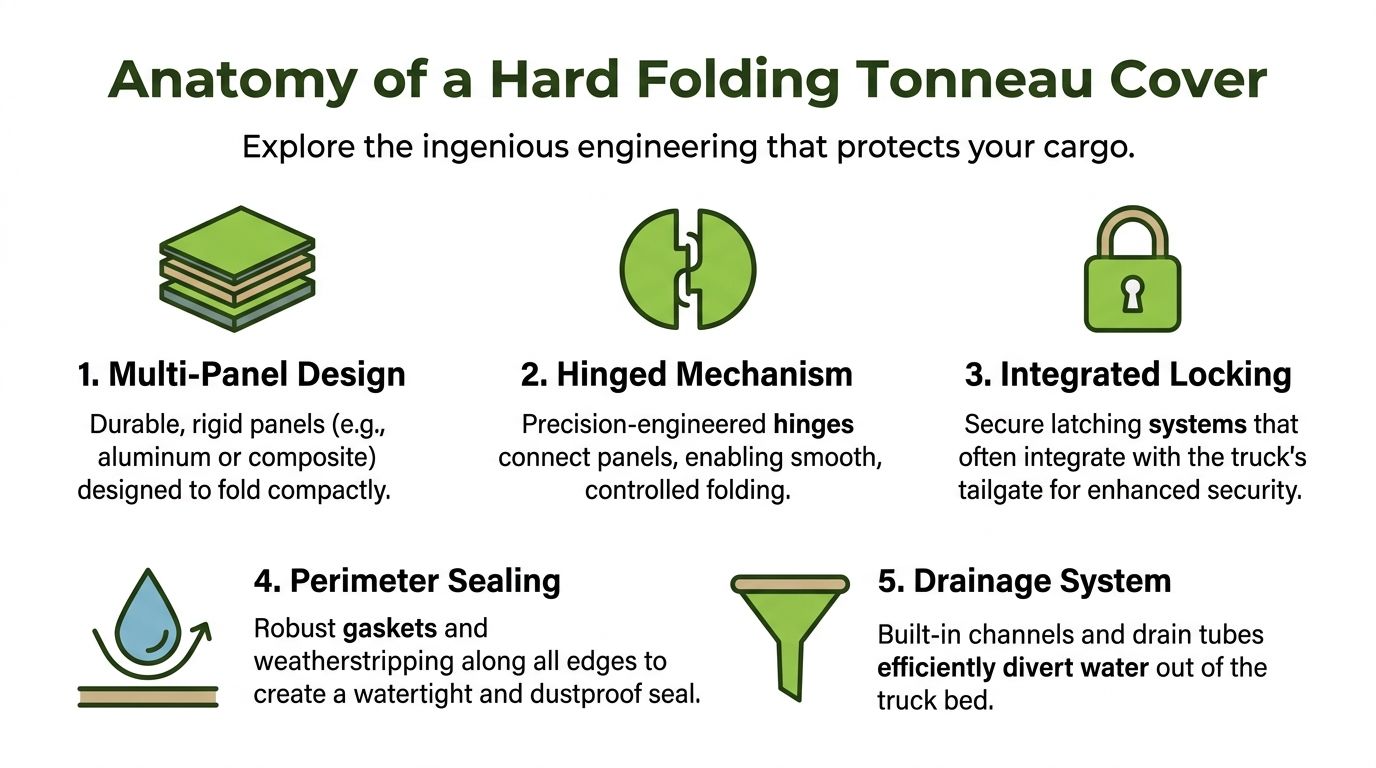
The panel system does the heavy lifting
A soft cover depends on tension. A hard folding cover depends on structure.
That is why hard folding tonneau covers, with some models supporting significant weight, can withstand substantial loads. For example, RealTruck Lo Profile hard folding covers are rated up to 400 lbs evenly distributed and some heavy-duty variants reach 500 lbs according to RealTruck. That kind of load rating is what separates this category from soft covers.
This matters when someone leans over the bed, loads gear across the top temporarily, or needs a cover sturdy enough for demanding work-truck duty. It also says a lot about how the panels and frame are built.
Tri-fold versus quad-fold
The fold pattern affects both convenience and trade-offs.
Tri-fold covers use three larger panels. They are simple, proven, and common. Fewer sections can mean fewer hinge lines to manage, and many owners like the straightforward operation.
Quad-fold covers split the top into more sections. That usually makes each panel shorter and easier to stack compactly. On some trucks, that can improve access and reduce how much height the folded stack takes up near the cab.
Here is the practical difference:
- Tri-folds suit owners who want simple operation and do not mind slightly larger folded sections.
- Quad-folds suit owners who open the bed often and want the stacked cover to take up less visual and physical space.
- Both styles can work well if the rails, latches, and seals are well designed. The panel count alone does not determine quality.
Mounting style changes the whole feel
Not every hard folding tonneau cover sits the same way on the truck.
Some are flush or low-profile, which means the cover sits close to the bed rails for a cleaner look. Others sit a bit higher, which can help with certain designs or accessory clearances.
That choice affects three things:
-
Appearance A flush cover usually looks more integrated with the truck.
-
Accessory compatibility Bed racks, rail systems, and bed liners can change what fits cleanly.
-
Water management Rail shape and seal placement matter as much as the panel material.
If you want to compare current designs by vehicle, hard folding truck bed covers are easiest to evaluate once you know your exact bed length, rail style, and whether you already have other accessories installed.
A folding cover should open easily, latch cleanly, and sit square on the bed. If any of those three are off, the owner feels it every week.
Decoding the Materials Aluminum vs Composite vs Fiberglass
Material choice decides more than strength. It affects finish wear, panel weight, dent resistance, and how the cover holds up after years of Florida sun, salt, and moisture.
A lot of product pages reduce this to a buzzword. Aluminum sounds premium. Composite sounds advanced. Fiberglass sounds tough. The key question is how each behaves on a truck that lives outside, gets washed inconsistently, and sees daily use.
Aluminum is popular for good reason
Aluminum dominates this category because it gives manufacturers a strong structure without making the cover too heavy to use. It also works well in low-profile designs.
The upper end of the category shows what good aluminum construction can do. The Westin Hard Tri-Fold uses UV-resistant reinforced aluminum panels with an aircraft-grade aluminum alloy frame and is rated to support up to 661 lbs of evenly distributed weight, according to Westin Automotive’s hard tri-fold product page.
That kind of capacity does not mean every aluminum cover is equal. Panel thickness, reinforcement, hinge quality, and finish all matter. But it does show why aluminum remains a serious choice for owners who care about strength.
Composite and FRP play a different game
Composite and fiberglass-reinforced designs often appeal to owners who want a different surface feel and good resistance to certain kinds of cosmetic wear. Some handle impacts and daily abuse well. Some also avoid the “metal panel” sound and feel that certain drivers dislike.
A well-made FRP or composite cover can be a smart fit for mixed use. Work during the week. Family and recreation on weekends. The trick is not assuming all composite covers behave the same in high heat and UV exposure. The coating system and hardware still matter.
In coastal Florida, the material is only half the story. The finish, seals, hinges, and latch hardware often decide whether the cover ages well.
Material comparison in plain terms
| Material | Pros | Cons | Best For |
|---|---|---|---|
| Aluminum | Strong, widely available, supports high load ratings, works well in low-profile designs | Can show dents or cosmetic wear depending on construction and finish | Owners who want strength, lighter operation, and broad model availability |
| Composite | Can offer solid everyday durability and a different surface feel than metal | Quality varies a lot between brands and designs | Drivers who want balanced daily-use performance |
| Fiberglass or FRP | Good rigidity, can feel substantial and secure, often attractive on premium covers | Weight and hardware quality matter more, and some designs can be less convenient to handle | Owners prioritizing solid feel and secure panel construction |
What works in Fort Myers and what does not
For coastal use, here is the effective filter I’d use.
Good fit: aluminum or quality composite covers with UV-stable finishes, dependable seals, and corrosion-resistant hardware.
Risky fit: bargain covers that advertise the panel material heavily but do not inspire confidence in the latch system, hinges, rail finish, or replacement-part support.
That is why it helps to shop the whole category instead of chasing one material label. Looking across tonneau cover options by truck application usually makes the trade-offs clearer than reading marketing copy alone.
The cost question is tied to material, but not ruled by it
Material influences price, but the bigger factor is how the whole assembly is engineered.
A cheaper aluminum cover is still a cheaper cover if the corners were cut on seals, hinges, powder coat, clamps, or latch design. A pricier composite model is not automatically a better investment if parts support is weak. Owners often focus on panel material because it is easy to compare. Long-term satisfaction usually depends on the less glamorous pieces.
The Twin Pillars Security and All-Weather Protection
The two reasons most Fort Myers owners buy a hard folding cover are simple. They want cargo out of sight, and they want it dry.
A hard cover earns its keep when it handles both at the same time.
Security starts with rigid structure
A soft cover can hide cargo. A hard folding cover can do more than hide it.
Rigid panels create resistance. Locking latches add another barrier. When the tailgate is locked and the cover is shut properly, the bed becomes much harder to access than it would be with vinyl stretched over a frame. That matters at job sites, hotel lots, marinas, shopping centers, and apartment complexes.
It is also why cheap hardware is a mistake. A rigid panel is only part of the security story. The latches have to stay aligned, the rails have to stay tight, and the cover has to close square. If the fit gets sloppy, the security promise drops with it.
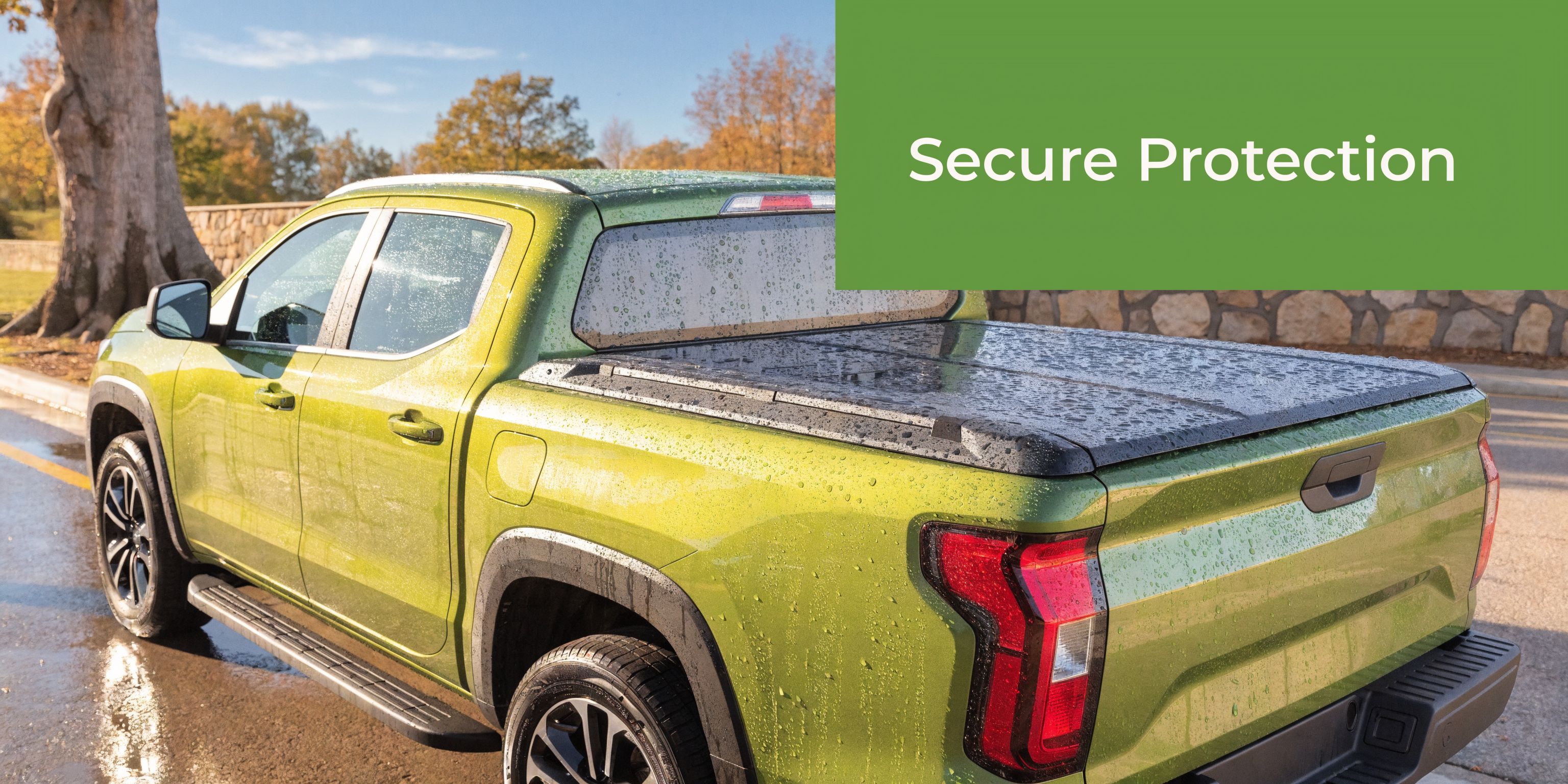
Water control is not just about keeping bags dry
Florida owners sometimes think of weather protection as a comfort issue. It is bigger than that.
Moisture that sneaks into the bed, sits under mats, or collects around corners can create long-term headaches. Even if your truck bed has a liner, standing water and trapped grime are not helping anything. A quality cover reduces that exposure by managing how water hits the top, edges, hinges, and rails.
According to Gator’s hard folding cover details, advanced water management systems on quality hard folding covers can use integrated rails and sealing systems that repel up to 99% of rainfall in dynamic water tests, while designs like the LEER HF650M use marine-grade overlaps and a patented latch approach to channel water away. That is the kind of engineering worth paying attention to in Southwest Florida.
The sealing details separate decent covers from frustrating ones
Three areas matter most:
- Perimeter seals keep water from creeping in around the bed rails and tailgate area.
- Panel overlaps and hinge design control how water behaves when it runs across folded sections.
- Drainage strategy moves water out instead of letting it pool where you cannot see it.
Some trucks also benefit from added sealing around the tailgate gap. If your truck has a noticeable opening there, tailgate seals can help tighten up one of the most common leak paths.
What holds up during storm season
The covers that perform best in Florida tend to share a few traits.
They close tightly. The cover should not feel vague or loose at the final latch point.
They use overlapping panel design intelligently. Water needs a path away from the bed, not a path into it.
They do not rely on one small fix for a larger sealing problem. If a cover needs constant adjustment to stay dry, it is not dialed in.
A hard folding tonneau cover should not make you guess after every rainstorm. If the seals and rails are right, you stop checking the bed every time the sky opens up.
How to Choose the Right Hard Cover for Your Truck and Budget
Buying the right cover gets easier when you stop asking “Which one is best?” and start asking “Which one fits how I use the truck?”
That answer is different for a contractor with expensive tools, a family hauling strollers and luggage, and a boat owner who wants secure weekend storage.
Start with how much bed access you need
Some owners open the cover once a week. Others open it six times a day.
If you regularly load tall cargo, you need to pay attention to how the folded panels stack and whether the cover can be secured in the open position. If you mostly carry tools, bags, and loose gear below rail height, nearly any well-made hard folding model may suit you.
Use this simple breakdown:
- Frequent partial access: quad-fold designs often make sense because the sections stack compactly.
- Occasional access with straightforward operation: tri-fold covers stay popular for a reason.
- Constant tall-load hauling: a folding cover may still work, but you should think carefully about whether another cover style better matches your routine.
Set a realistic budget before you compare features
Hard folding covers sit in the premium side of the bed-cover market. According to Automoblog’s review of hard tonneau covers, popular hard folding models range from $700 to over $1,500, and the BAKFlip MX4 retails around $1,200.
That price spread usually reflects differences in:
- panel construction
- finish quality
- rail design
- latch hardware
- warranty terms
- water management details
If your budget is at the low end, be selective about what you give up. Cosmetic extras are easier to sacrifice than seal quality or latch design. If you are spending toward the upper end, make sure you are paying for real improvements in operation, materials, and fit, not just a familiar name.
Match the cover to what you haul
Many buyers make the wrong call at this stage. They shop for looks first.
Instead, think through your cargo.
Contractor or fleet use Choose a cover with a strong top-load rating, durable hardware, and easy repetitive operation. Cosmetic finish matters less than hinge quality and latch consistency.
Daily driver with family and travel gear Quiet operation, low profile appearance, and good weather sealing often matter more than maximum top-load capability.
Fishing, boating, beach, and sports use Prioritize corrosion-resistant hardware, clean drainage, and finishes that hold up to sun and moisture.
Installation affects ownership more than people expect
A hard folding cover is not difficult to clamp on in basic terms, but “installed” and “installed correctly” are not the same thing.
Rail alignment matters. Clamp pressure matters. Seal placement matters. A cover can look fine and still leak, bind, or wear unevenly if the fit is off. That is one reason professional installation often saves money later, especially on newer trucks where owners do not want to fight with adjustments.
This walkaround gives a good sense of what owners should watch for during selection and fitment.
A practical buying checklist
Before you buy, answer these five questions:
-
What is my truck’s exact bed length and rail setup? Fitment mistakes start here.
-
Do I need the cover to support weight on top? Some owners do. Some never will.
-
How often will I fold it open? Daily-use covers need smooth hardware.
-
Will the truck live outside full time? In Fort Myers, that raises the importance of finish durability and seal quality.
-
Do I want professional fitment and service support? That matters more once the truck sees regular weather and real cargo use.
One local option is Truck Stuff, which offers hard folding covers with UV-stable panels, flush-mounted designs, rubber seals between the rails, and professional installation in Fort Myers.
The cheapest cover to buy is not always the cheapest cover to own. A cover that leaks, fades badly, or needs repeated adjustment can cost more in frustration and replacement parts than the original savings were worth.
Long-Term Care for Your Cover in the Florida Climate
Most buyers spend a lot of time comparing price, panel material, and appearance. Far fewer ask what the cover will need after years outside in heat, UV, rain, and salt air.
That is the key ownership question.
According to TrucknAmerica’s discussion of hard folding covers, a major gap in existing content is the lack of discussion around maintenance schedules and the cost of replacing worn components over a 5-10 year lifespan. For Florida owners, that gap matters because the first parts to age are often not the panels. They are the seals, hinges, coatings, and latch components.
The common assumption that costs owners money
A lot of people assume a hard folding tonneau cover is nearly maintenance-free because it looks rugged.
It is low-maintenance compared with many accessories. It is not no-maintenance.
UV exposure can dry out seals. Salt air can make hardware sticky. Dirt in hinge lines can wear surfaces faster. If the finish goes neglected, the cover can look older than the truck long before its structure is worn out.
What to do on a routine basis
You do not need an elaborate schedule. You do need consistency.
- Wash the panels regularly: remove salt film, sand, and grime before they sit on the finish.
- Inspect seals by feel: if rubber starts feeling dry, brittle, or flattened, it needs attention.
- Clean hinge areas carefully: trapped grit works like sandpaper over time.
- Check latch action: if it stops feeling crisp, do not ignore it until it becomes a failure.
- Look at rail alignment after heavy use: repeated loading, slamming, or leaning on the cover can shift things slightly.
Where Florida is hardest on these covers
The biggest local stress points are not dramatic storm events. They are daily conditions.
Sun exposure wears on rubber and surface coatings.
Humidity keeps moisture around longer than you think.
Salt air gets into hardware and accelerates corrosion on lesser components.
Wind-driven rain tests whether the seals were good to begin with.
If a cover is going to age badly in Fort Myers, it usually shows up first at the edges, hinges, and latches. Not in the middle of the panel.
What owners should ask before buying
Long-term durability starts before installation.
Ask whether replacement seals are available. Ask whether latches or hinge parts can be serviced. Ask how the finish should be cleaned. Ask what maintenance could affect warranty coverage. Those answers tell you more about long-term ownership than a glossy brochure does.
This matters even more for fleets. One truck with a sticky latch is annoying. Several trucks with aging covers become downtime, service coordination, and repeated expense.
Get Expert Tonneau Cover Installation in Fort Myers
A good hard folding cover gives a truck bed three things that owners in Fort Myers need year-round. Better security. Better weather protection. Better day-to-day usefulness.
But the product alone is only half the job.
If the rails are not aligned, the seals are not seated properly, or the cover is not matched to the truck’s exact bed configuration, the owner ends up chasing problems that should have been avoided from day one. The most common complaints with tonneau covers are often fitment complaints in disguise. Water at the corners. Uneven latching. Panels that do not sit flat. Hardware that loosens because the setup was never quite right.
That is why local installation matters. A shop that works on trucks every day can spot bed liner interference, tailgate gap issues, clamp placement problems, and clearance conflicts before they turn into leaks or rattles. That is especially important on work trucks and daily drivers that cannot afford avoidable downtime.
For owners in Fort Myers, the smart move is to choose the cover based on how the truck is used, then have it fitted with the same attention you would give any other protective upgrade. The cover should open cleanly, close square, seal consistently, and work with the rest of the truck instead of fighting it.
If you are comparing options for an F-150, Silverado, Ram, Tacoma, or a fleet vehicle, getting hands-on guidance is usually the fastest way to narrow the field and avoid buying twice.
If you want help choosing and installing the right hard folding tonneau cover for your truck, contact Truck Stuff in Fort Myers for a vehicle-specific quote and fitment guidance.